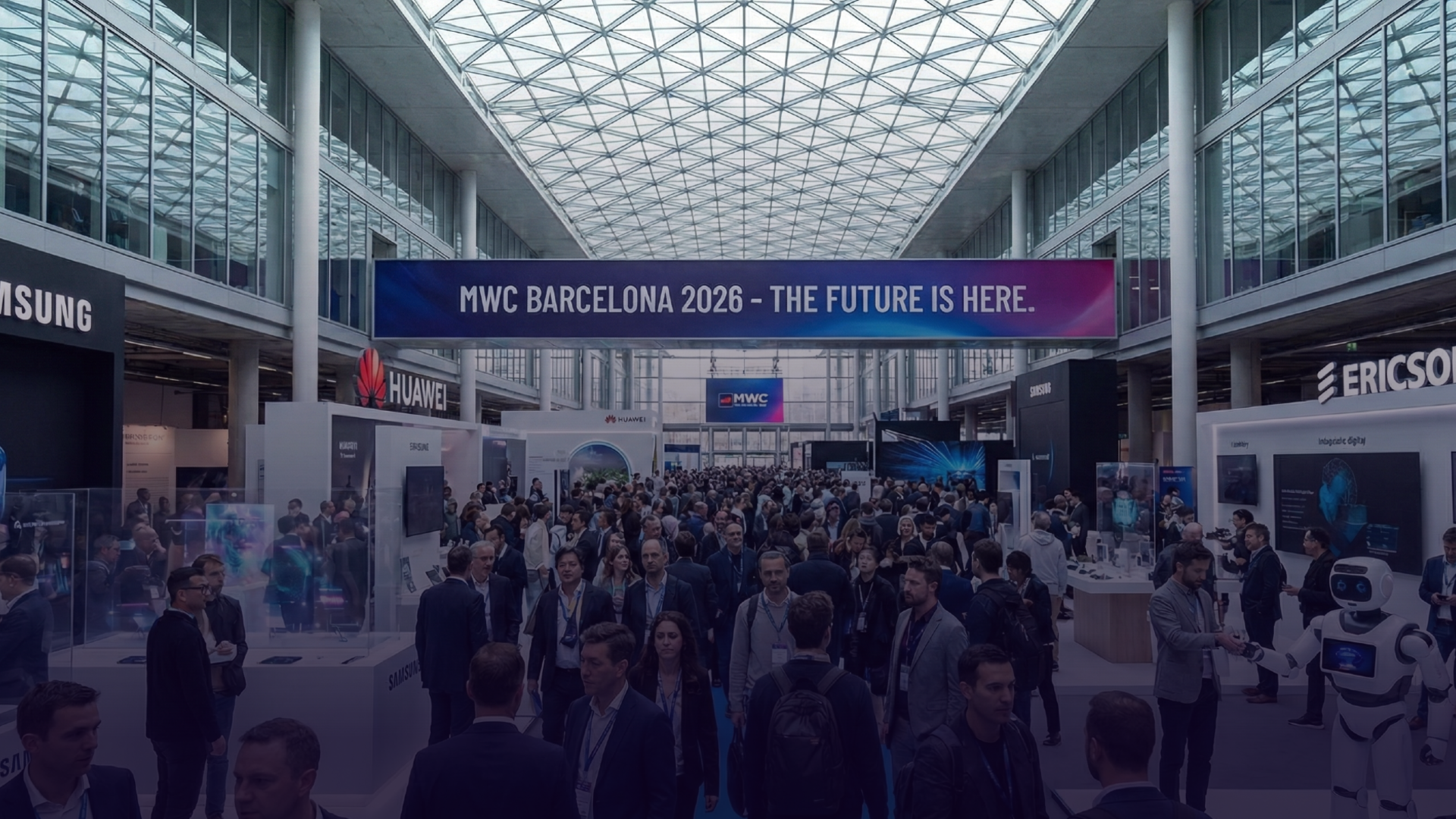

MWC will surely bring product launches and big promises: satellites, AI devices, new network optimization tech and a newer pitch about “Agentic AI.” The value for carriers comes from the practical details, not just the cool demos. Ask questions that reveal whether a vendor’s tech truly solves real customer problems, especially around device experience and the customer relationship. So, if you’re heading to MWC 2026, here’s what telco executives should be asking about the customer experience side of innovations bound to transform telecoms. Here are three items to ask questions about.
D2D (satellite connectivity): It’s not only a network play
Satellite-to-device services are arriving fast, with Starlink deals already in motion and more likely on the way. Operators already see them moving from novelty to mainstream connectivity must-haves. But hybrid satellite–terrestrial performance is as much about the handset as it is about the space segment: successful switching depends on modem firmware, antenna condition and battery health, and satellite links can consume a lot more power.
So at MWC ask vendors and partners:
- How do you qualify a device for reliable D2D use before enrolling a customer; what telemetry do you need from the handset to pre-empt failures; how will firmware, eSIM profiles and provisioning be managed at scale; and what mechanisms exist to limit battery-drain or gracefully degrade service when devices are underpowered?
- Press for operational details: How do you expect to handle intermittent links, billing events and support handoffs when a session moves from tower to satellite and back? These are the questions that reveal whether a satellite is a marketing headline or something your ops teams can actually support.
AI-powered devices: Where’s the data and who owns it?
Speakers will describe phones that feel like “AI edge nodes,” but the business question for carriers is simple: where does the data live and how can it be used responsibly to preserve the operator’s relationship with customers? Whether the interface is an app today or an AI “concierge” tomorrow, the underlying need is the same — signals from the device to power useful automation and offers.
So at MWC ask vendors and partners:
- Telemetry: What kind of device telemetry can be leveraged; what APIs exist for mobile operators to receive sanitized telemetry in real time; how are privacy and data-locality requirements handled; and how will models be partitioned between device, edge and cloud so latency-sensitive, privacy-critical functions remain under operator control?
- Answers here indicate whether a vendor enables operators to remain relevant in the new UX or simply cedes the customer to the OEM’s AI layer.
Agentic AI: Show me revenue, not just demos
MWC buzz will show agentic systems promising autonomy across networks and ops – a defensive strategy for operations. Now, it’s time to go on the offensive: revenue. This year, telecom executives must ask for proof that consumer-facing agentic AI moves the business needle, not just applications for internal productivity or savings. Last year’s GenAI pilots yielded productivity wins; this year, vendors must demonstrate measurable revenue outcomes from AI that manages customer journeys (faster resolutions, higher conversions, fewer repeats).
So at MWC ask vendors and partners:
Demand evidence: real consumer pilots with conversion metrics, end-to-end flows that link app diagnostics to in-store or care action, concrete lift numbers (acceptance, conversion, NPS), and a clear safety/oversight model for automated outreach. If a vendor can’t show how agentic AI changes customer behavior or monetizes device moments, it’s still testing, not production.
To explore these tough questions and see solutions that leverage data and Agentic AI to power stronger telecom customer experience, visit MCE in the Network Optimization and Customer Experience section of the AWS pavilion. More info here.